Until the 17th century the state made no specific provision for old and injured soldiers.
During the reign of Queen Elizabeth I it was recognised that provision needed to be made for poor, sick and disabled soldiers. This led to an Act of Parliament, passed in 1593, that levied a weekly tax on parishes for the relief of soldiers and sailors.
17th Century
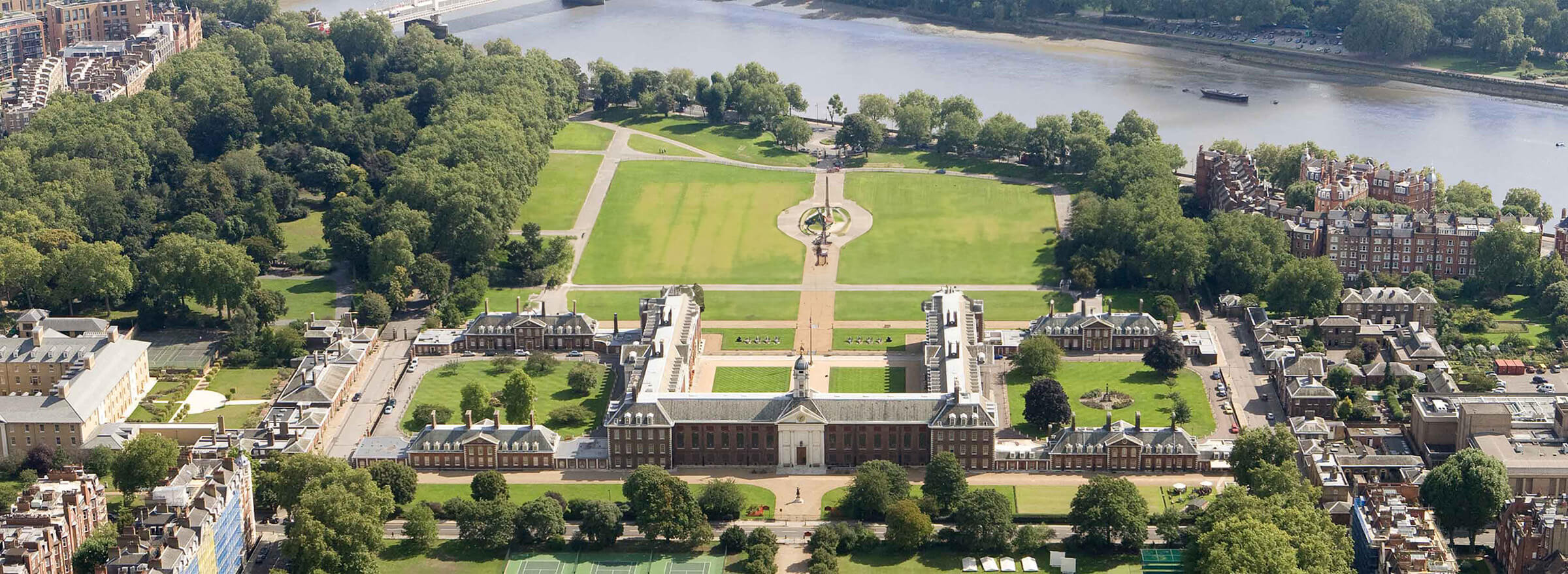
By 1673 it was becoming increasingly apparent that some soldiers were no longer fit for service. In 1681, King Charles issued a Royal Warrant authorising the building of the Royal Hospital Chelsea to care for those 'broken by age or war'.

Sir Christopher Wren was commissioned to design and erect the building. Sir Stephen Fox was commissioned to secure the funds necessary to progress the build.
The chosen site, set adjacent to the River Thames in the countryside of Chelsea contained the uncompleted building of the former 'Chelsey College'.
In 1692 work was finally completed and the first Chelsea Pensioners were admitted in February 1692 and by the end of March the full complement of 476 were in residence.
18th Century
The early funding of the Royal Hospital was made from deductions from army pay, with occasional funding from other sources. This continued to be the Royal Hospital's main source of revenue until 1847. Since then the Hospital has been supported by 'Grant-in-Aid' from the Ministry of Defence and a small income from the Army Prize Money and Legacy Fund.
19th Century
Wren's magnificent formal gardens, which provided a vista from the Royal Hospital to the River Thames and included canals, gazebos and summer houses were all demolished between 1850-1868 when the Chelsea Embankment was constructed.

The present Ranelagh Gardens were laid out by John Gibson (who designed Battersea Park and several Royal Parks) in about 1860.
In 1809, Sir John Soane constructed a new Infirmary building, with space for 80 patients on the site now occupied by the National Army Museum. The Infirmary was damaged by bombing in the Second World War and was later demolished.
20th Century
Since 1913 the Royal Horticultural Society's Chelsea Flower Show has been held annually on the South Grounds.
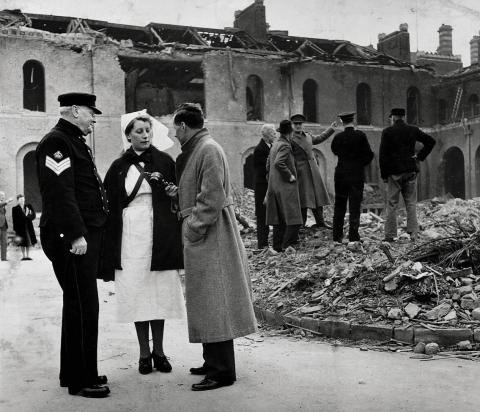
Parts of the Royal Hospital Chelsea were heavily damaged, with some loss of life during World War I. After being reconstructed in 1923 the buildings were then destroyed by a V2 rocket in 1945.
The 'berths' were enlarged in 1954-55 and again in 1991 to resize them from 6" by 6" to 9" by 9".
21st Century
2002 saw the restoration of the large mural painting in the Great Hall by the artists Antonio Verrio and Henry Cooke.

As part of the celebrations for Queen Elizabeth II's Golden Jubilee in 2002, the statue of King Charles II was regilded. The Royal Hospital Chelsea presented the Queen with the parade chair (which can be seen in the Museum) and Queen Elizabeth II present the Royal Hospital with the Sovereign Mace, which is now carried at all of the Royal Hospital's ceremonial events.
In March 2009 the Margaret Thatcher Infirmary, designed by Sir Quinlan Terry, was opened and is a state of the art care home and hospice for Chelsea Pensioners.
The first phases of the Long Ward refurbishment have been completed and all rooms will be upgraded to the new ensuite rooms with a study by 2015.